


J-PARC Center2-4 Shirakata, Tokai-mura, Naka-gun, Ibaraki 319-1195, JapanWebmaster:<web-staff@j-parc.jp>

- Message from the Project Director
- ›› Message from Director of J-PARC Center (April 2018)
- What is J-PARC?
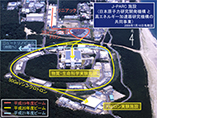 J-PARC (Japan Proton Accelerator Research Complex) consists of a series of world-class proton accelerators and the experimental facilities that make use of the high-intensity proton beams.
- ›› more
- News and Topics
 ・ J-PARC Project Newsletter No.71, July (Sep. 5, 2018) ・ J-PARC Project Newsletter No.70, April (May 17, 2018) ・ J-PARC Project Newsletter No.69, Jaunary (Feb. 5, 2018) ・ J-PARC Project Newsletter No.68, October (Dec. 1, 2017) ・ J-PARC Project Newsletter No.67, July 2017 (Aug. 24, 2017)
 - ›› more
- Event Notice
 ・ Discovery of a New Crystal Structure Family of Oxide-Ion Conductors NdBaInO4 (May 16, 2014) ・ Discovery of a new magnetic ordering phase in an iron-based superconducting material (Mar. 27, 2014) ・ Discovery of novel magnetism in the iridium compound CuIr2S4 (Feb. 28, 2014)
 - ›› more
- Latest News
 ・ J-PARC Project Newsletter No.71, July (Sep. 5, 2018) ・ J-PARC Project Newsletter No.70, April (May 17, 2018) ・ J-PARC Project Newsletter No.69, Jaunary (Feb. 5, 2018) ・ J-PARC Project Newsletter No.68, October (Dec. 1, 2017) ・ J-PARC Project Newsletter No.66, April 2017 (May 22, 2017)
 - ›› more

- Reports, Publications
 ・ J-PARC introductory video ・ Publication List ・ Annual Report ・ The other ・ Brochure
- ›› more
- Restoration of East Japan Great Earthquake
 ・ Situation immediately after East Japan Great Earthquake
・ Post-disaster situation and progress of restoration
・ Situation immediately after East Japan Great Earthquake
・ Post-disaster situation and progress of restoration
- ›› more
- committees
 ・ IAC ・ A-TAC ・ PAC ・ NAC ・ MAC ・ T-TAC
- ›› more
